Anno Domini · MMXXVI
Seven centuries
beneath your feet
Chapter I
Fifteen mills to feed a city
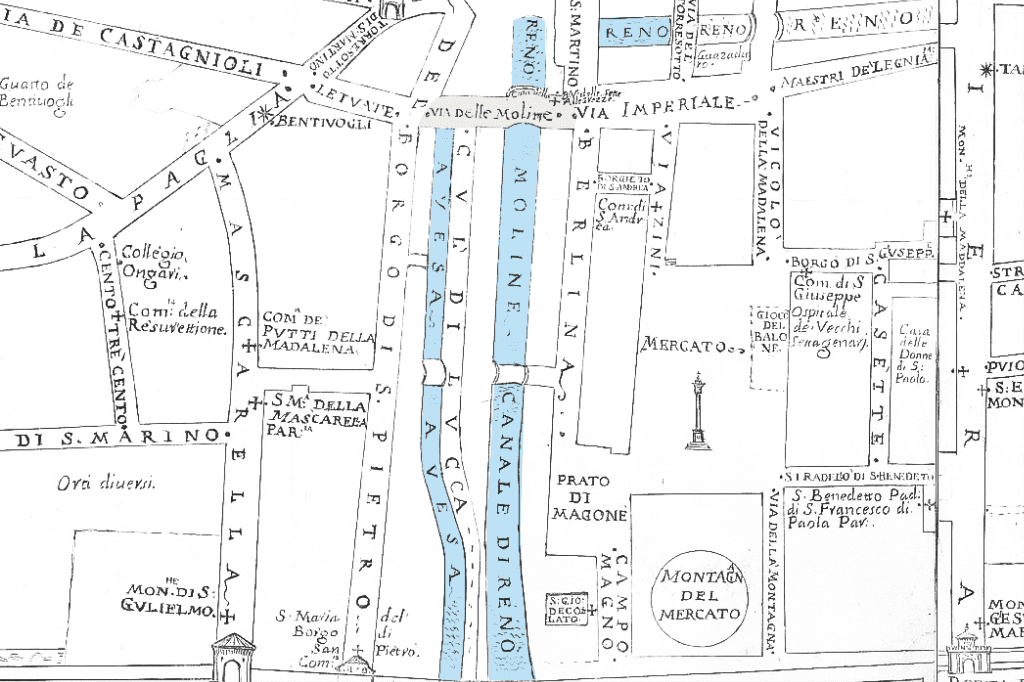
Before it became a street, this was a canal. The Canale delle Moline carried the waters of the Reno river into Bologna, and along its course turned fifteen water wheels — fifteen grain mills that produced all the flour for the city.
The guild that ran them was called the Università delle Moline e delle Moliture. The millers lived in the houses built right around here, on Via Capo di Lucca, just a few steps from our tavern.
Fifteen wheels, one single city to feed.
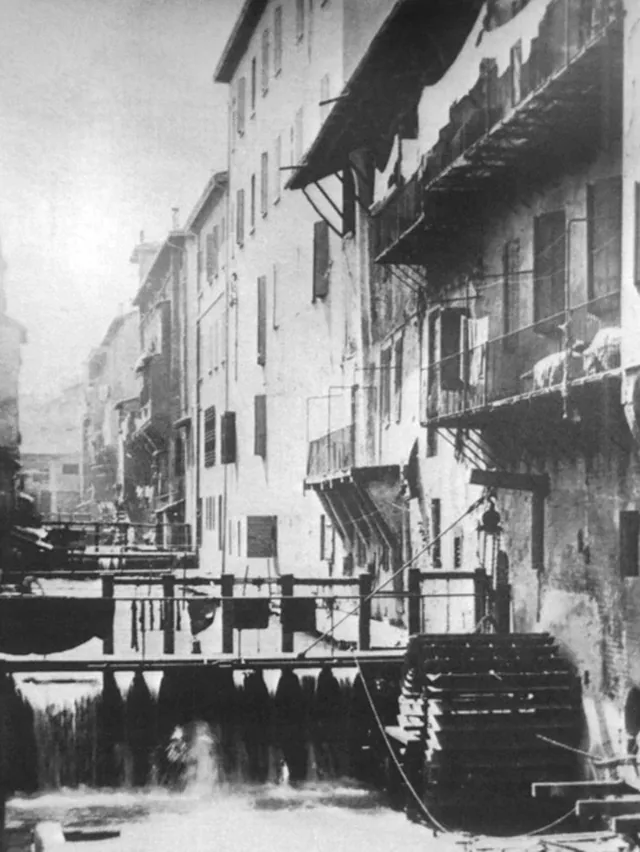
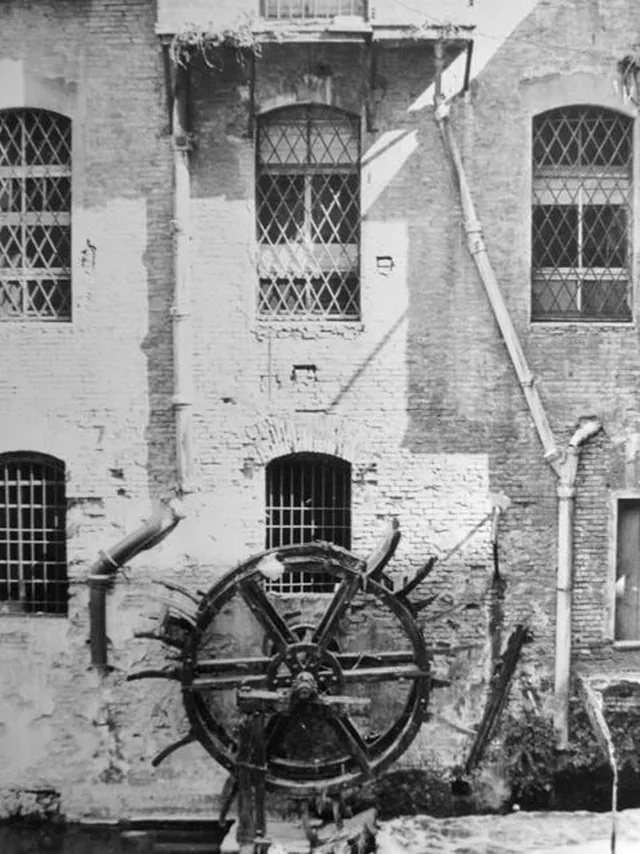
The great wooden paddles, set against the brick walls of the mill-houses, turned day and night driven by the current. The sound of the water and the millstones was the soundtrack of this district.
In the first decades of the 20th century the city decided to cover the canal for hygienic and urban reasons: the wheels were dismantled, the watercourse hidden beneath the street. Today, walking along Via delle Moline, you literally walk above a river — and above seven centuries of work.
Chapter II
Le Tuate: where the flour waited
The stretch of street where Le Moline stands today had another name: Le Tuate. They were the warehouses — from medieval Bolognese dialect, tubata — where the flour was stored after milling.
A little further on, in what was called Via delle Stadiere, stood the city scales. Every sack was weighed here and taxed with the customs duty before it could enter the city.
Flour milled. Flour stored. Flour weighed.
Then, at last: flour cooked.
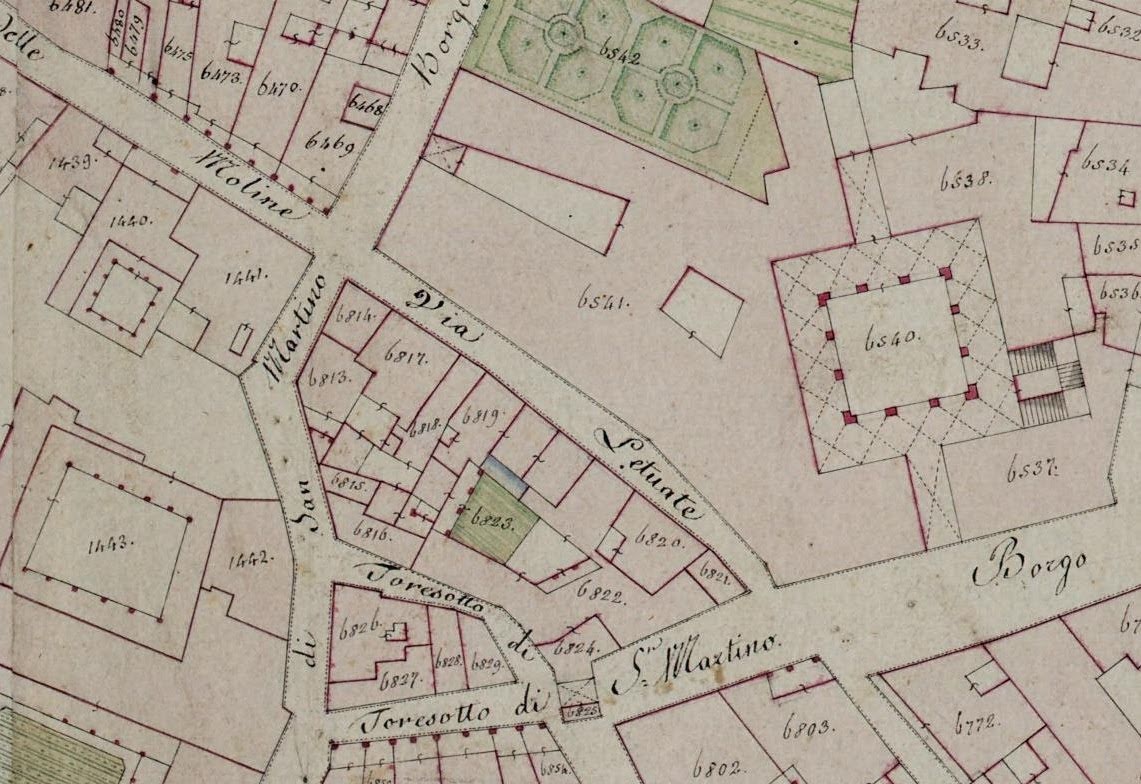
«Via delle Stadiere owes its name to the fact that here the customs duty on flour was paid by weight.»
Chapter III
The well is still here
As soon as you enter the tavern, to the left of the door, there is a glass panel in the floor. Beneath that glass, a medieval well.
It's not a stage prop. It has been there since before the tavern existed, before Via delle Moline had this name, perhaps before the millers built their warehouses right on top of it.
The canal workers drank from it. The millers drank from it as they unloaded sacks of flour. Today you walk over it while you wait for your table.
PUTEUS · SEC. XIII
Chapter IV
The Miller's Bull
In any tavern worthy of the name, the food should tell you where it comes from. We do it literally.
When your first course arrives, you'll find on the table a replica of the Weighing Bull — the document millers received at the Stadiere after paying the flour duty. Mill of origin, weight in Bolognese pounds, seal of the town's Weighmaster.
The pasta you eat is made from flour. That flour, centuries ago, passed through here. The bull is the document that certifies it.
Bulla Ponderis
Universitas Molinariorum
Bononiae · MDCXLII
- Molino:
- delle Moline
- Pondus:
- XXIV libbre
- Dazium:
- solutum
Bologna on your plate, every day
Le Moline is not a museum. It's a tavern open 365 days a year, from noon to 11:30 pm, non-stop kitchen.
But every tagliatella al ragù, every tortellino in brodo, every lasagna makes even more sense because this place has a story — and that story begins with a canal, fifteen mills and a sack of flour weighed right here.
Historical sources
The historical information on this page comes from verifiable institutional sources. The maps are public-domain archival documents.
- Storia e Memoria di Bologna — Via delle Moline — Civic Museums, Municipality of Bologna
- Origine di Bologna — Canale delle Moline — onomastic and historical research
- Rete dei Canali di Bologna — Canale delle Moline