Walking guide · Free · 45 minutes
The Hidden Canals
of Bologna
Water still runs under the city centre. A self-guided walk to the Finestrella di Via Piella, the Canale delle Moline and the water places most visitors miss.
Photo: Bristin, CC BY-SA 3.0, via Wikimedia Commons
Like Venice and Amsterdam, Bologna was built on water. Its centre was once crossed by more than 60 km of canals: the Reno, the Savena, the Navile and the Canale delle Moline powered fifteen grain mills, dozens of workshops and the most famous silk mills in Europe.
In the 20th century the city covered almost all of them. But if you know where to look, the water is still there — behind a small window, under a glass floor, at the end of a narrow street in the university quarter.
This guide starts at Via delle Moline 2/F, in front of our trattoria, and takes about 45 minutes on foot.
Distance
~2 km
Duration
45 min
Entry
Free
Start
Via delle Moline
The route
Six stops on the water
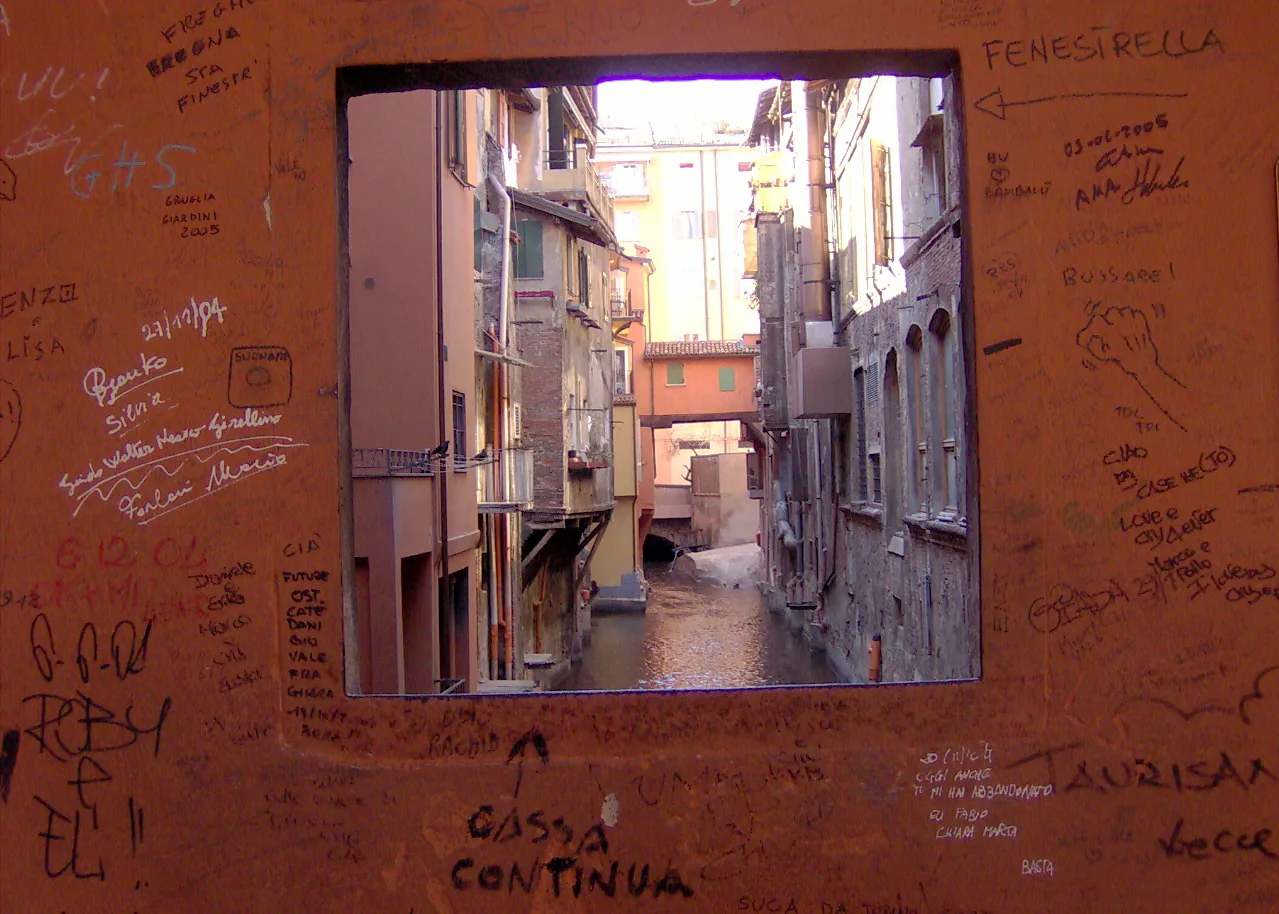
Finestrella di Via Piella
The most photographed little window in Bologna. A hidden opening onto the Canale delle Moline that most tourists walk past without noticing. Free, always visible. Midday light is best.
5 min walk from Le Moline
Photo: Bristin, CC BY-SA 3.0, via Wikimedia Commons
Canale delle Moline (Via Oberdan)
Just before the Finestrella, the canal runs open-air behind Via Oberdan — another quiet viewpoint, without the crowd.
3 min walk from Le Moline
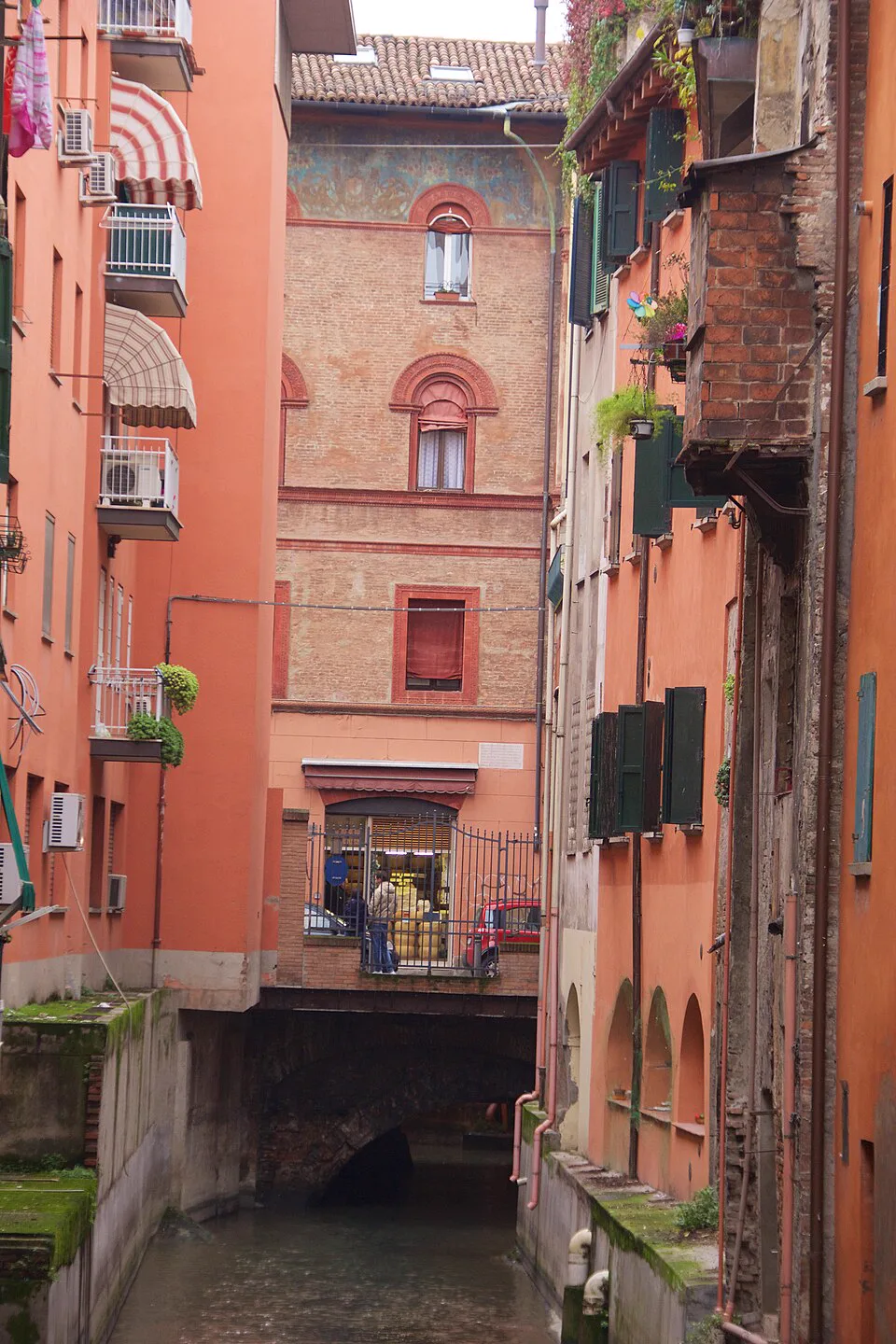
Photo: Mike Peel, CC BY-SA 4.0, via Wikimedia Commons
Via delle Moline — above the canal
The street where our restaurant stands runs directly on top of the Canale delle Moline. Seven centuries ago, fifteen grain mills turned here.
0 min: you are already here
Read our story →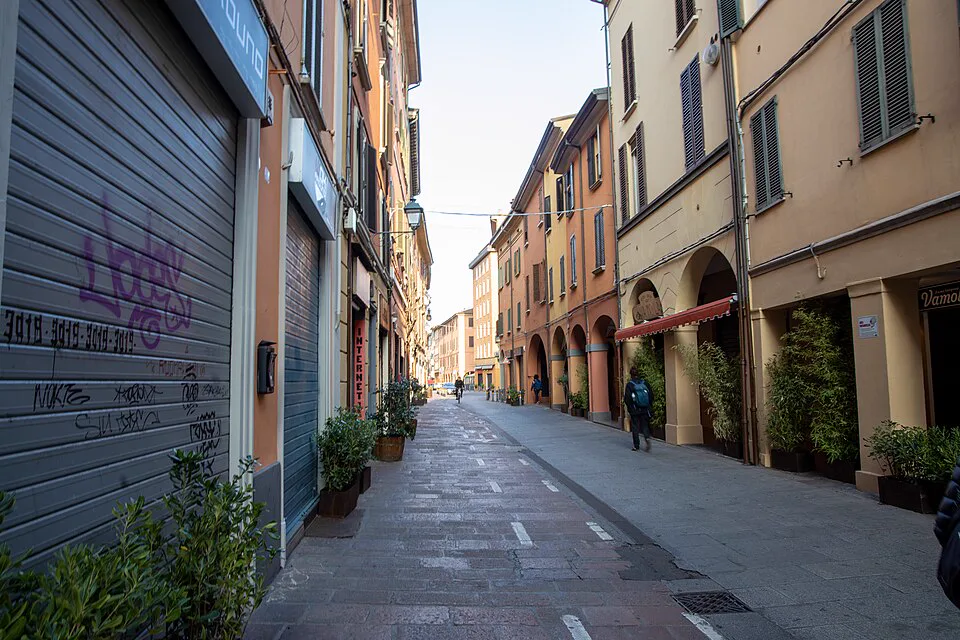
Photo: Fabrizio Garrisi, CC BY-SA 4.0, via Wikimedia Commons
Via Capo di Lucca — the millers' houses
The houses on both sides once belonged to the millers of the Moline guild who worked the fifteen mills of the canal.
2 min walk
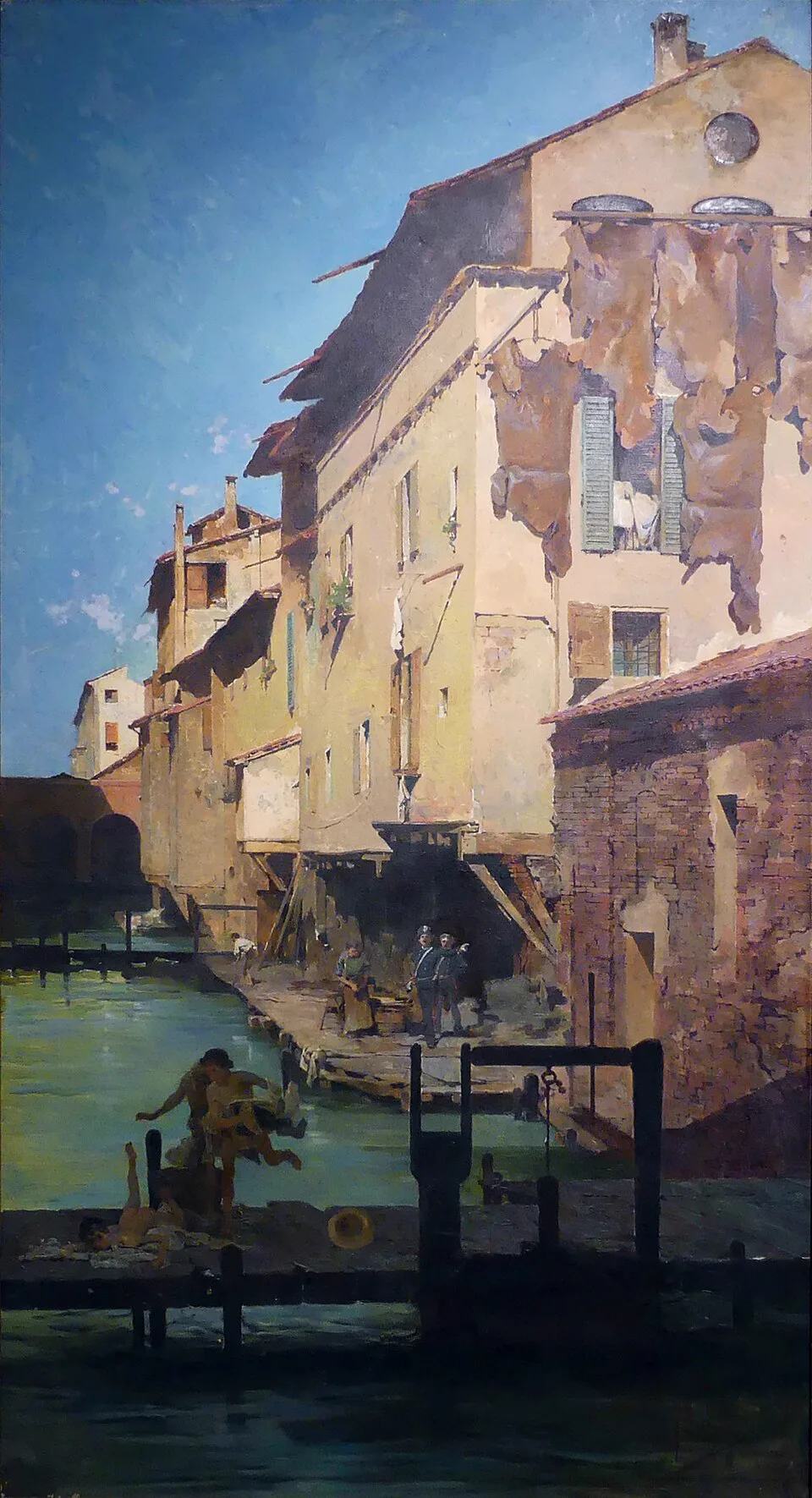
Photo: Raffaele Faccioli (painting), Public domain, via Wikimedia Commons
Via Malcontenti & Via Piella
A quieter view of the canal, where the water disappears again under the city. A good spot for an unhurried photo.
4 min walk
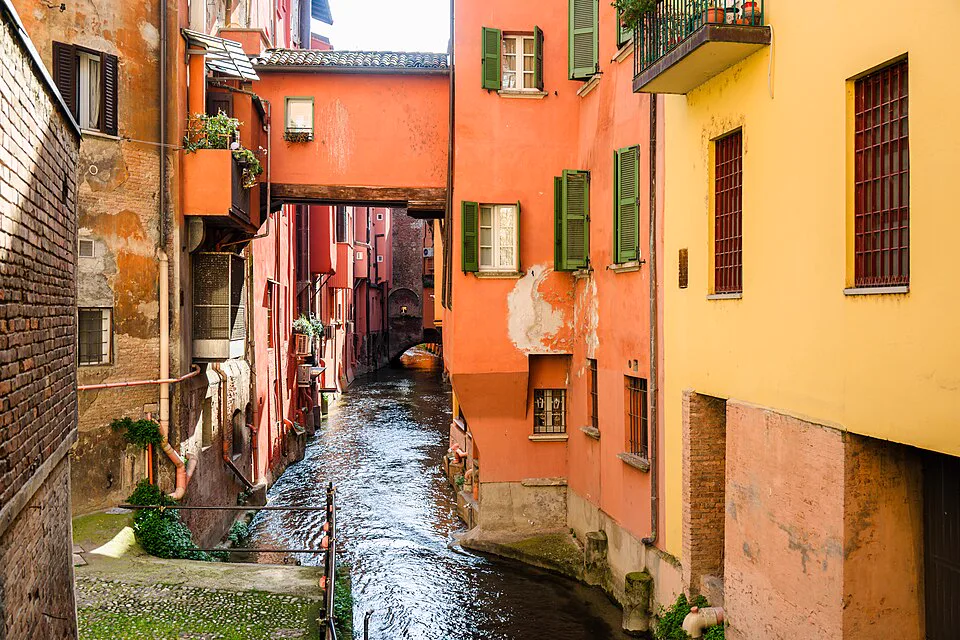
Photo: Marcamps, CC BY-SA 4.0, via Wikimedia Commons
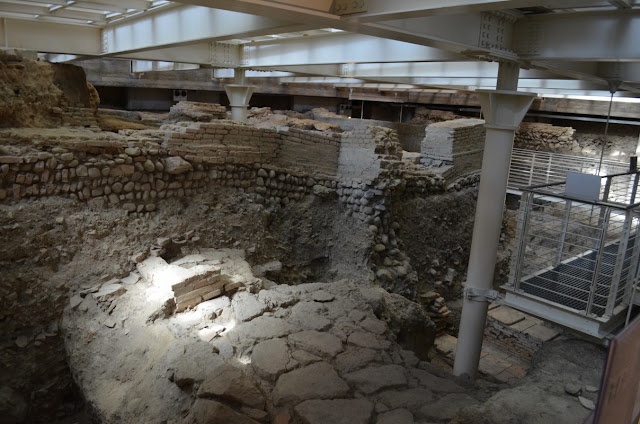
Roman cistern — Salaborsa Library
At the end of the walk, inside Salaborsa Library, a glass floor reveals the Roman remains of the city. Bologna's water story begins here, centuries before the mills.
10 min walk
Why the canals are hidden
Until the 19th century, Bologna's canals were the engine of the city. Then came steam, then electricity: the mills stopped, the water became a nuisance for traffic and a hygiene concern.
Between 1950 and 1960 the city covered most of the central canals with concrete and asphalt. In a decade, Bologna stopped being a city of water.
Only a few viewpoints remain — the Finestrella di Via Piella is the most famous — but if you walk through the university quarter and know where to look, you can still hear water running under your feet.
After the walk, sit down with us
Le Moline is a few minutes from every stop. The restaurant sits directly on top of the Canale delle Moline, with a medieval well still visible at the entrance. Tagliatelle al ragù, tortellini in broth, lasagne — every day, 12:00–23:30.